Games / Quarter-Turn City
One city. Five Modestos.
The same streets, turned a quarter toward a different idea of how people should live. QTC Modesto takes the world of the Quarter-Turn City novels and makes it a text MUD, the old kind, where you read the room, type what you do, and find out who runs the place by how it treats you.
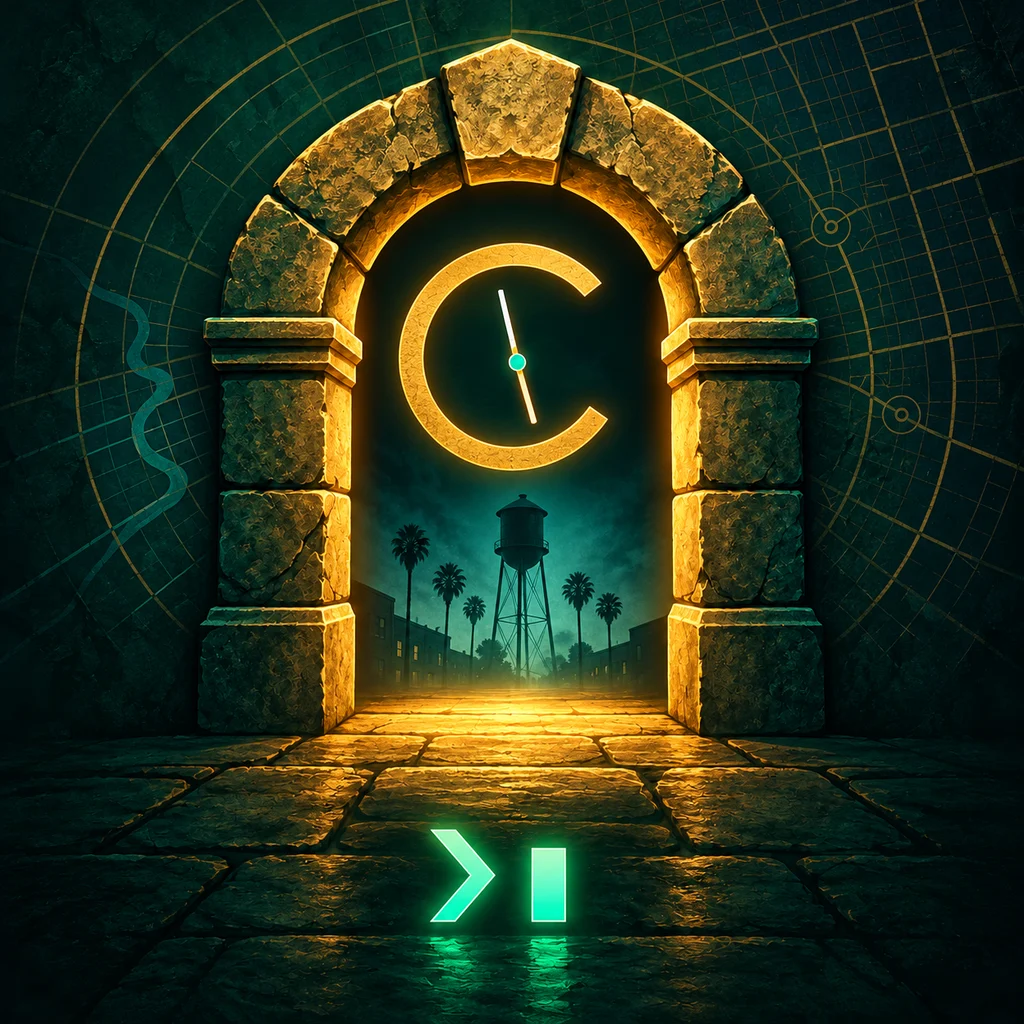
Find your way through the city
Home, Clean, Time, Bright and Sorted share 35 districts. Downtown connects the schools, MJC East, the theaters, the workshops and the neighborhoods people actually live in. Farther out the game reaches orchards, vineyards, a data center and the city’s recovery works. The water tower and the Sierra haze stay put in every version. What changes is who owns the water, who counts the hours, and what it costs to be sorted.
The State Theatre and the Gallo Center have their own areas. Markets, food stands, a pawn shop and a speakeasy give the city places to stop, trade and hear what the official account leaves out. Real street connections sit beside fictional interiors, homes and counterpart districts, and the game says which is which when it matters.
Six campaigns follow the books through conversations, records and investigations. Each runs eight chapters. How you approach a chapter is saved: a repair holds, a notice stays unserved, a worker remembers that you stood with her. Residents keep track of the part you played.
Farm country
Take the bus out of Home’s transit shelter and the sidewalks give out. Type ENTER FARM at the shelter and you are on gravel: 85 rooms of almond rows, Thompson vines, tomato ground, ditch banks and pump sheds. Near the road the trouble is small, almond moths off last season’s hulls, aphids, gophers undercutting the drip lines, canal rats big as housecats and a boar or two in the beds.
Farther in, the canal runs through a gated headworks, and the gate has guards. The company calls them water protectors. The name was taken from people who stood up for rivers that belong to everyone; these are hired men in tan vests, paid by the day to keep neighbors away from a pipe, with orders about the fence and nothing about the farms on either side of it. Somewhere past them a griffon keeps a nest on a steel platform, an eagle’s body with a lion’s head, and the talon he drops feeds whoever holds it on what it cuts.
Classic MUD play
A MUD is a text world you move through by typing. Read the room, look at an object, talk to whoever is there, pick an exit. Combat keeps the ACKMUD rhythm of rounds, skills, spells and equipment, and you can punch, kick, block and patch yourself up.
Build a character
Experience comes from investigations and encounters. Train in a class and take a specialization. Some level gains and some later routes require a won fight. Hacker abilities belong in this city and do the work spellcasting does in an older game.
Return with a purpose
Each district has rare encounters that leave collectible keepsakes, so a place is worth a second visit. Saved progress keeps your campaign decisions, local discoveries and what was rare when you were last there.
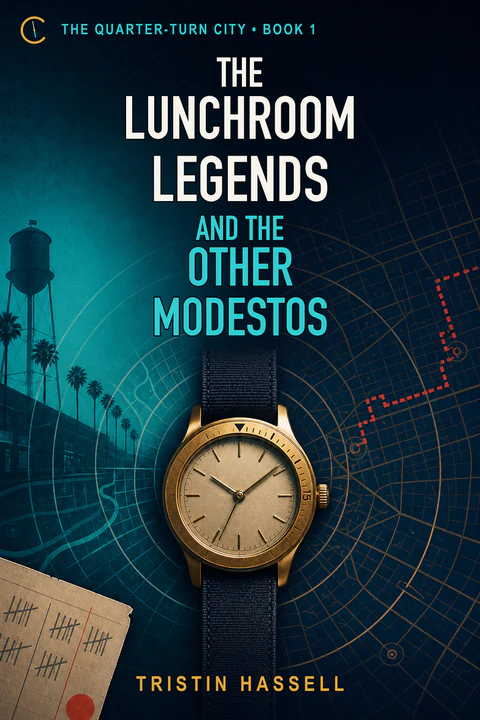
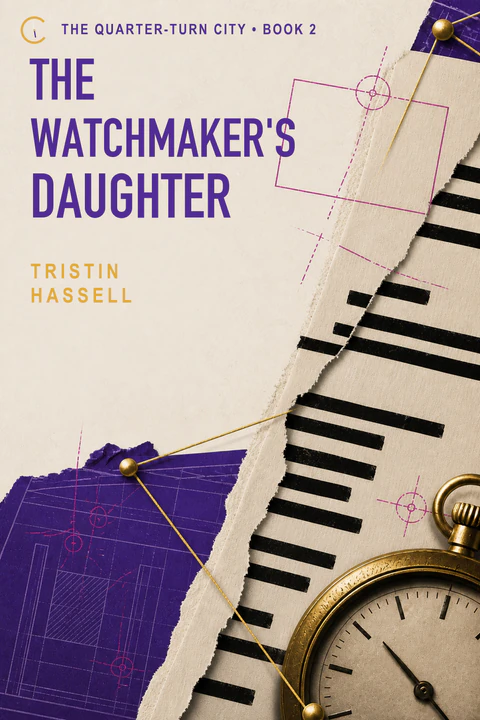
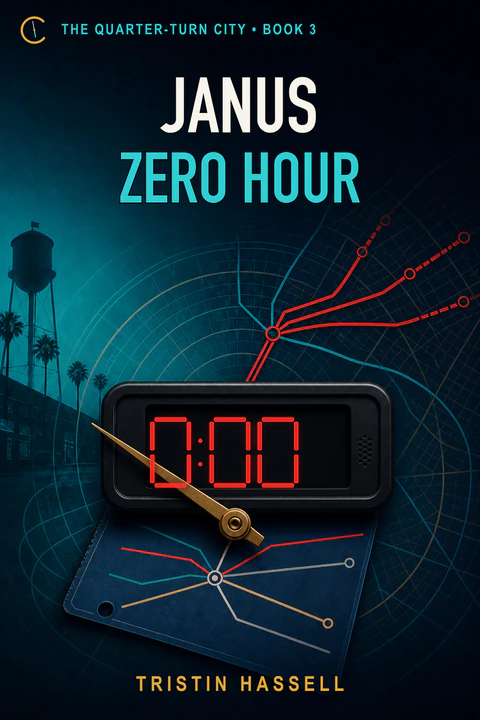
The books behind the game
QTC Modesto grows out of the people, places and investigations of Quarter-Turn City.
Code credits
QTC Modesto is a heavily modified ACKMUD based on ACK! MUD 4.3.1, which builds on Merc and DikuMUD. Credit belongs to the original DikuMUD authors, the Merc team, Stephen Dooley, Stephen Zepp and the ACKMUD contributors. The original copyright and license notices are retained in the source, and the game is run under their terms. The Quarter-Turn City setting, the campaigns, the farm and the QTC-specific additions are by Tristin Hassell / Gathered Commons Press.
New to text adventures?
The game includes a saved opening guide. QTC BEGIN starts it; QTC JOURNEY shows the next step. It walks you through moving around, investigating, fighting, shopping and training. QTC JOURNAL keeps the useful commands close at hand.
You can save and come back later. The guide sits beside the command-driven game; it does not turn it into something else.